Steaks · Ribs · Exceptional meats
Wagyu, Black Angus, Galician beef: the best of meat
The ribeyes
To share
The signature
Street food
To start
On the side
To finish
Alcohol-free

The guide
Origins, cuts, cooking, menu ideas: everything you need to understand the La Ruche Steak & Ribs menu and put your meal together.
At first glance, a steakhouse menu can seem technical: breeds, countries, grades, weights. In reality, it is very easy to read, as long as you know three reference points.
The first is the breed: Wagyu, Black Angus, Galician beef or Simmental. It determines the style of the meat, more or less marbled, more or less bold. The second is the origin, meaning the country where the animal was raised, which shades the flavour. The third is the cut: ribeye, sirloin, picanha, T-bone, bone-in rib steak or tomahawk.
When a weight is given, it helps you judge the portion: 300 g for a generous individual cut, 500 g for a bone-in cut, more than a kilo for a cut to share.
This guide goes through each section of the menu, to help you choose before you even sit down. And on site, the team will gladly add to these explanations.
A few terms come up throughout the menu. Here they are, each explained in a sentence.
Marbling: the fine veins of fat inside the muscle, which melt during cooking and give tenderness. The more marbled a meat is, the more tender and rich it is.
Grade: the score given to marbling. For Australian Wagyu, the scale runs from 0 to 9+.
Ribeye: a cut taken from the rib section, generous and marbled. Sirloin: its neighbour, with a tighter grain. Picanha: a triangular cut topped with a layer of fat, very fragrant.
T-bone: a slice cut with a T-shaped bone, which separates the fillet from the sirloin. Bone-in rib steak: a thick ribeye served on the bone. Tomahawk: a rib of beef with its whole bone handle left on, to share.
Tagliata: meat seared then thinly sliced, Italian style. Carpaccio: raw meat cut into very thin slices.
Ribs: beef ribs cooked slowly, then glazed. Brisket: beef breast cooked for a very long time until melting.
Dry ageing: an extended rest for a cut in a dehumidified, temperature-controlled environment, which tenderises the meat and concentrates its flavour.
Glaze: a sauce applied at the end of cooking, which caramelises in the heat. On the menu, it comes as Honey & Barbecue or Hot & Spicy Barbecue.
With these few words, the menu holds no more secrets for you. And if you still have a question, ask it at the table: the team loves talking about its meats and will take the time to answer before you order.
The ribeye is the king of steakhouse cuts, and the menu offers several. All come from the same part, the rib section, but no two are alike.
The Black Angus ribeye comes in four origins. The one from Uruguay offers a frank taste, inherited from the great grasslands. The one from the United States is more marbled and very tender. Those from New Zealand and Australia are balanced, with a fine grain.
The Galician beef ribeye plays a different tune: deep red meat, slightly golden fat, intense flavour. It is the choice of those who love character.
The Australian Wagyu ribeye, grade 8-9+, is the most melting of all. Highly marbled, it is best enjoyed in a moderate portion and cooked medium.
For a first visit, the Black Angus ribeye is a safe bet. For an occasion, treat yourself to the Wagyu or the Galician.
Black Angus is the most represented breed on the menu, and that is no accident. Originally from Scotland, it is now raised on several continents, which makes it a wonderful ground for comparison.
Offering the same cut, the ribeye, from four origins lets you measure what farming changes in the taste. In Uruguay, the animals grow up on vast grasslands: the meat has a clean, frank taste. In the United States, farming favours marbling: the meat is richer, more tender, rounder. In New Zealand and Australia, you get fine-grained, balanced meats of great consistency.
None is “better” than another: it all depends on what you are looking for. If you like tenderness, turn to the United States. If you prefer a direct beef flavour, to Uruguay. If you are undecided, Australia and New Zealand offer a good compromise.
The most interesting experience is to order two origins cooked the same way and taste them one after the other. It is a game our regulars love, and the best way to explore the menu visit after visit.
Australian Wagyu holds a special place on the menu. Graded 8-9+, it sits at the top of the marbling scale: its fat, spread in very fine veins, melts during cooking and gives an almost buttery texture.
Three cuts are offered. The picanha, topped with its cap of fat, is the most fragrant. The sirloin offers a little more bite. The ribeye is the richest.
Wagyu also appears in more accessible dishes: as carpaccio, sliced very thin and served raw; as croquettes, crisp and melting; as a burger, for an indulgent, relaxed version.
A tip: if you are new to Wagyu, start with the carpaccio or share a cut between two. It is so rich that a small amount is enough to satisfy.
Two origins are aimed more particularly at connoisseurs. Galician beef comes from north-west Spain. From animals raised for longer than average, it gives a deep red meat, edged with golden fat, and a long, almost buttery flavour.
On the menu, it appears as a ribeye, for grill lovers, and in the Galice Burger, for a more indulgent approach.
Simmental is a breed of Swiss origin, widespread throughout Europe. Well marbled, it is particularly suited to thick cuts. The 500 g bone-in rib steak is the best illustration: juicy meat, flavoured by the bone, with a generous bite.
These two meats have one thing in common: they put flavour first. If you sometimes find beef too neutral, these are the ones to turn to.
Bone-in cuts are the most spectacular on the menu. The bone protects the flesh during cooking and adds flavour: the meat stays juicy and fragrant.
The 500 g Black Angus T-bone brings two cuts together around its T-shaped bone: on one side the fillet, tender and delicate, on the other the sirloin, firmer. Two textures on one plate.
The Simmental bone-in rib steak, also 500 g, is a thick ribeye kept on its bone. Well-marbled Simmental is perfect for it.
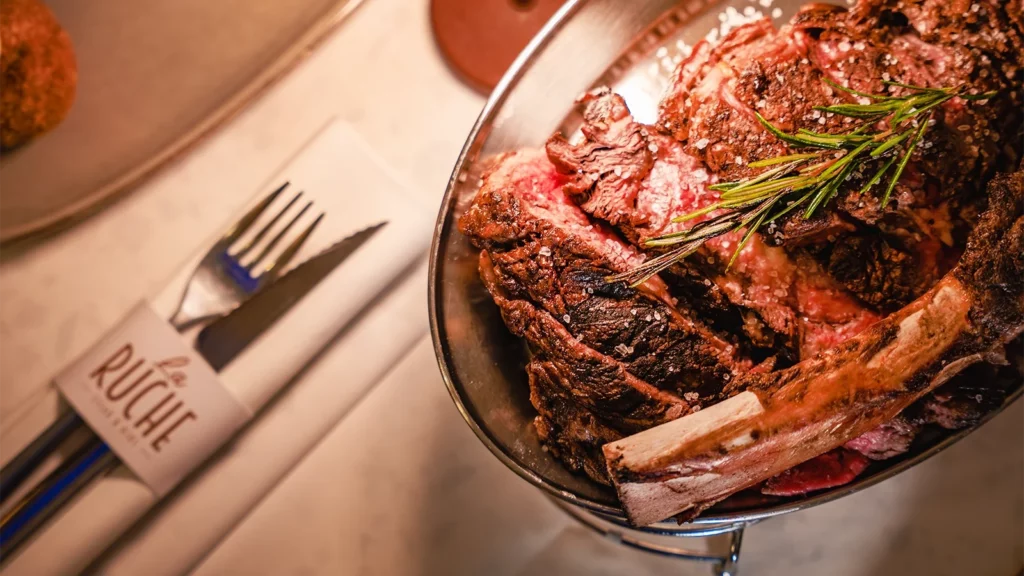
Finally, the Black Angus tomahawk weighs around 1.2 kg. Served with its long bone handle, it is shared between two or three guests and arrives sliced in the centre of the table.
These cuts need a little more cooking and resting time: order them at the start of the meal.
Alongside the ribeyes and bone-in cuts, the menu offers other grills, perfect for a simpler meal.
The 300 g Black Angus sirloin is an individual cut with a tight grain, edged with a thin strip of fat. It appeals to those who like meat with some firmness.
Tagliata is an Italian-inspired preparation: the meat is seared, rested, then thinly sliced before serving. It is an elegant, light way to enjoy beef, ideal for sharing.
The fillet, the most tender and leanest cut, is for those who favour finesse.
All these cuts are cooked to order. Tell us how you like it, or let us advise you.
Beef ribs are the signature of the house. On the menu, they come in several recipes, including Honey & Barbecue and Hot & Spicy Barbecue.
Their secret is slow cooking, which makes the meat so melting that it comes away from the bone. They are then glazed and seared to caramelise the sauce.
Brisket, beef breast cooked for a very long time, belongs to the same family. Sliced thick, it is soft and fragrant.
These dishes suit those who prefer meat cooked through. They are great for sharing: a portion of ribs in the centre of the table is the ideal complement to a grilled cut.
Some cuts on the menu are dry-aged. This means that after butchering, they rest for an extended period in a dehumidified, temperature-controlled environment.
This resting time has two effects. The meat becomes more tender, as its fibres soften naturally. And its flavour concentrates, as some of the water evaporates. The result is a more intense meat with more complex aromas.
Ageing is reserved for certain exceptional meats, well marbled or on the bone. Ask the team which cuts are aged on the day of your visit.
To appreciate an aged meat, choose rare or medium, and taste it first without sauce.
The burgers get the same care as the large cuts. The menu offers several, made with the house’s exceptional meats.
The Wagyu burger shows off the tenderness of this meat in a soft bun. The Galice Burger brings together 200 g of Galician beef, mature cheddar and caramelised onions: a burger with character.
Served with homemade fries, the burgers are an excellent choice for lunch, a family meal or a first taste of the house.
Starters open the meal and lend themselves to sharing. The Wagyu carpaccio, the homemade croquettes and the other “to start” plates help you wait while the large cuts are cooking.
We recommend ordering two or three for the table rather than one per person. You will taste more, without spoiling your appetite.
Remember to save room: the main cuts are generous.
Sides are chosen separately, as you wish. The menu offers homemade fries in three versions, classic, with parmesan or sweet potato, and homemade mash, plain or with truffle.
Baby potatoes with thyme, seasonal vegetables and green salad provide lighter options.
Allow one side per person, to pass around. With a highly marbled meat, go for salad or vegetables; with a leaner cut, mash or fries.
The menu ends with desserts: brioche French toast, crème brûlée and other sweet treats depending on the address.
As for drinks, house mocktails are a speciality: alcohol-free creations, fresh and fruity, made to order.
A tea or a coffee rounds off the meal.
The classic, for two: Wagyu carpaccio to share, two Black Angus ribeyes of different origins to compare, homemade fries and green salad, one dessert for two.
The feast, for three or four: homemade croquettes, a Black Angus tomahawk in the centre, a portion of Honey & Barbecue ribs, truffle mash, sweet potato fries and seasonal vegetables.
Discovering Wagyu, for two: Wagyu picanha to share, a Black Angus sirloin to go with it, baby potatoes with thyme.
The relaxed meal: Galice Burger or Wagyu burger, parmesan fries, brioche French toast.
These suggestions are only starting points. The team will help you adjust the quantities.
Blue: a very brief sear, raw and warm in the centre. For fillet.
Rare: red and hot in the centre. The recommended cooking for Black Angus ribeye and sirloin.
Medium: pink in the centre. Ideal for Wagyu and highly marbled meats, whose fat needs to melt.
Well done: cooked through. In that case it is better to choose the ribs or the brisket, which slow cooking makes melting.
In any case, state your preference when you order.
The menu was designed for sharing, which makes it very practical for groups. Rather than one dish per person, we recommend putting together a selection in the centre of the table.
For six guests, for example: three or four starters to share, two large bone-in cuts, two portions of ribs in different recipes, and five or six assorted sides. Everyone tastes everything, and ordering is quick.
For a birthday or a team meal, let the restaurant know when you book. The team can suggest a selection suited to your numbers and budget, and prepare the large cuts in advance, as they need longer cooking and resting times.
Desserts follow the same logic: a few plates in the centre, several spoons, and everyone is happy.
This way of ordering has another advantage: it leaves more time for conversation. That is exactly what we want for a large table.
This page presents the spirit of the menu shared by our addresses in Brussels, Antwerp and Marrakech: the same passion for exceptional meats and the same specialities.
Each restaurant has its own menu: dishes, drinks, desserts and prices vary from one address to another. You will find each restaurant’s full menu, with prices, on its own page.
To discover the cuts of the moment, you can also check the La Ruche Atomium Instagram account.
Do you have a food allergy or intolerance? Tell the team as soon as you order: they will point you to suitable dishes and pass the information on to the kitchen.
Likewise, do not hesitate to make special requests: sauce on the side, a different side, a precise cooking. The menu is a starting point, and we do our best to meet your wishes.
What is the speciality of the house? Grilled exceptional meats and beef ribs.
Which cut should we choose for two? The Black Angus tomahawk, or two ribeyes of different origins.
Are there dishes for children? They love the burgers and homemade fries.
Does the menu change? The broad lines stay the same; some suggestions change with the seasons.
Can we see the menu before coming? Yes, each restaurant’s menu is available on this site.
Legal notice
Privacy
Cookies
